Contents
Why do we feel happy, sad, angry, bored, scared…? If you have ever watched the animated movie “Inside Out”, you probably still remember the 5 “emotional” characters in the cute little girl Riley – Happy, Angry, Disgusted, Scared. Fear and Sadness. It is these 5 lovely “emotional pieces” that govern Riley’s every gesture, action and mood to help her overcome difficulties in life.
However, the composition and impact of “emotions” in reality is more complex than in Pixar’s animated film. Join us to learn more about the nature and impact of emotions on the mind and body . From there, you will be able to understand yourself and bring positive emotions to those around you.
Emotions are an endless cycle of electrochemical signals
Emotions are an endless cycle of electrochemical signals generated by the brain, reflecting our perception of an object or event. These electrochemical signals are transmitted to every organ in the body and transmitted back to the brain. This process takes place continuously every day, every hour. Depending on each individual’s worldview, each person’s feelings towards the same thing or event can still be different.
There are 8 basic types of emotions
No matter how diverse our moods are, they will still revolve around 8 basic emotions: Happiness, Sadness, Fear, Disgust, Anger, Surprise, Hope, and Trust. Our mood can be contained within one type of emotion or be dominated by many different emotions.
To illustrate more easily, Robert Plutchik, an American psychologist, drew the Wheel of Emotions to help us visualize countless different emotions that are a combination of these 8 types of emotions. Emotions will be divided into 3 increasing levels as they get closer to the center, and when two emotions are close together, a new mixture of emotions will be created. For example, “Love” would be created from the emotions “Joy” and “Trust”, while “Contempt” would be a combination of “Anger” and “Disgust”.

There are no good emotions or bad emotions
You might think: The feeling of Happiness must be better than Sadness, because who ever wants to be sad? However, emotions are a neutral category and we cannot call an emotion good or bad.
For example, faced with something you want, you will be happy if you get what you want, and sad if you lose it. However, to ask the question again, if you don’t feel sad when you miss something, how can you feel joy when you achieve what you want? In fact, these two opposing emotions are two essential aspects of one need.
Second, every emotion in us is simply a signal that transmits messages from the brain to the organs. Even emotions that cause discomfort to us, such as Fear, Anger, or Sadness, have their own functions. So what is the function of emotions?
We survive and develop thanks to emotions
Emotions help focus our attention and motivate us to take specific actions. Each emotion has a different purpose. For example, “Anger” is a signal that what you want to do is being blocked. Feeling angry will draw your attention to the object that is preventing you from doing what you want and encourage yourself to react to push back the obstacle. While anger can have a negative impact on you, anger can also energize us to face our problems and find solutions.
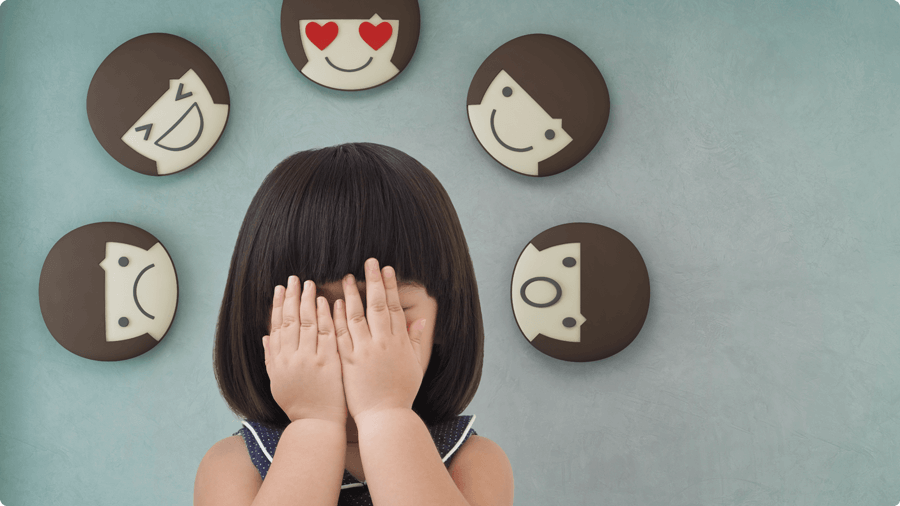
Another example of the “Happy” emotion: When we are happy, we often focus on opportunities, thereby providing motivation for us to achieve our set goals. Not only that, we feel happy when we feel meaning and connection to life , and the purpose of the “Joy” emotion in this context is to signal to us that we should continue to find Seek to do the same good things.
To gain a deeper understanding of the message each emotion conveys, you can download the document Emotoscope Feeling Chart (roughly translated: Feeling Chart through the lens of emotions). This chart shows the message that each of the different emotional shades of Sadness, Joy, Anger, and Fear wants to convey.
For example, if one day you feel overwhelmed, look at the Chart to see that the feeling of Overload is actually your body’s signal that you need to take time to reprioritize your life. living. From there, instead of avoiding, you learn to listen to your emotions and find solutions – such as creating a to-do list with priority order from high to low. Although simple, the chart above will make your life easier and make you see that all your emotions are beneficial.
Emotions are contagious
Like a virus, emotions can be “transmitted” from person to person. Whether you are interacting with a group or just one person, you can “spread” and be “infected” with emotions, both positive and negative. The reason for this is related to the evolutionary process: humans often exist and develop in groups. In other words, we live in groups and tend to pick up on each other’s emotional states.
For example, if you see fear on the other person’s face, you will quickly be wary of your surroundings, because your own emotions of fear are activated as soon as you see the other person’s attitude. In fact, we constantly send and receive emotional messages through many means, such as sentence punctuation, facial expressions, posture and behavior, sometimes without even paying attention. Do not believe it? Talk to an older person and notice if your tone and expression slow down to his or her rhythm.
Most interestingly, in the current 4.0 era, emotions are not only “contagious” when you directly chat with the other person. A study from Facebook and Cornell University has proven that emotional contagion also occurs through social networks. From there, we can see that we have a very deep emotional connection with each other.
Emotions are different from feelings and moods
However, these three concepts still have a correlation. So where is the difference? The difference lies in the length of time each of the above concepts affects us, and our level of awareness.
In essence, emotions are chemical compounds secreted in the brain and body in response to your interpretation of a particular issue. The brain needs ¼ second to identify a problem and another ¼ second to produce emotional chemicals. Each emotion lasts only a few seconds.
Feelings appear when we become aware of emotions and allow them to “enter” the brain. Usually, the feeling is a combination of many emotions, and lasts longer than the emotion.
Mood is not born from a single cause but is the result of many factors: External influences (weather, people around,…); physical (food, exercise regimen,…) and finally – psychological state. Moods can last for hours or days.
Each emotion lasts only 6 seconds

Emotional chemicals – from being produced in the hypothalamus to being broken down and absorbed – remain in the body for about 6 seconds.
If it takes longer than 6 seconds, you may be choosing to prolong those emotions, and they will become felt and present for longer. This can be good when you perceive danger and want to prolong the feeling of fear so you can force your body to run faster to escape the enemy. This can also be bad when you want to prolong your anger so you can take revenge on your opponent.
In fact, the Emotional Quotient (EQ) that we often refer to is the index that records the ability to recognize emotions, evaluate the purpose of that emotion, and decide whether to recreate that emotion or not. . Therefore, don’t forget to constantly listen and think carefully about your emotions, thereby adjusting your behavior and mood to make a decision that is most beneficial for you.

Leave a Reply